Should You Still Learn to Code in the AI Era? An Honest Answer
AI writes the code now, and the answer is still yes. What you learn just changes.

"AI writes all the code now, so why learn it?" It is the question beginners ask most these days.
The honest answer is yes, you still should. The reason has just changed. The more AI writes code for you, the more valuable the person who can judge whether that code is right and decide what to ask for becomes. You can delegate the typing. You cannot delegate the judgment.
Below I will answer the "why bother if AI does it" question properly, split the work AI can take from the work you have to own, and lay out what to learn first in the AI era.
The trap in "AI writes it all anyway"
AI produces code fast. The catch is that it never guarantees the code is correct. Code that works in the demo but quietly breaks on one specific input, code with a security hole, code nobody can maintain six months later, AI hands all of it over with the exact same confidence.
Say you ask AI to build a login feature. The screen loads, the login works. But what if the code it handed back looks like this?
# AI-generated signup, runs fine in the demo
def save_user(name, password):
    db.insert({"name": name, "password": password})  # stores the password as-is
This runs without a single error. The problem is that it stores the password in plain text with no encryption, and if you cannot read the code, you will not even know that is a problem. If you can, that one line where password goes straight in jumps out at you. The demo passes, and the incident shows up later. To get past "it runs" and reach "it is correct," you have to be able to read what AI wrote.
What to hand to AI, what to keep
AI did not take coding away. The center of gravity moved. The labor-heavy, repetitive parts shifted to AI, and the parts that need judgment landed more squarely on the person.
| Task | Fine to hand to AI | You have to do this yourself |
|---|---|---|
| Writing code | Repetitive code, boilerplate, filling in syntax | Deciding what to build and how to structure it |
| Fixing bugs | Listing several likely causes and fixes | Telling which one is the real cause |
| Design | Laying out options with pros and cons | Weighing the trade-offs and deciding |
| Verification | Drafting test code | Confirming it actually behaves correctly |
The left column gets better every month as models improve. The right column only works if the person at the keyboard understands the code. The goal of learning to code shifted from "type the left column fast" to "do the right column well."
If you cannot read code, you cannot direct AI
This is the core of it. Ask AI to "fix this bug" and it usually throws back two or three possible causes. All of them sound plausible. Picking the real one is still on you. If you cannot read code, you are guessing between the three, and that is how you break the parts that were working fine.
The difference between people who use AI well and people who do not is not fancy prompting. It is whether they doubt the answer and verify it. To describe what you want precisely, you need to understand what you are building. To check whether the result is right, you need to read code. Learning to code now means building the ability to delegate work to AI and review what comes back. If AI is a sharp new hire, the senior who hands it tasks and checks the output is you, the person who can read the code.
So what do you learn, and how
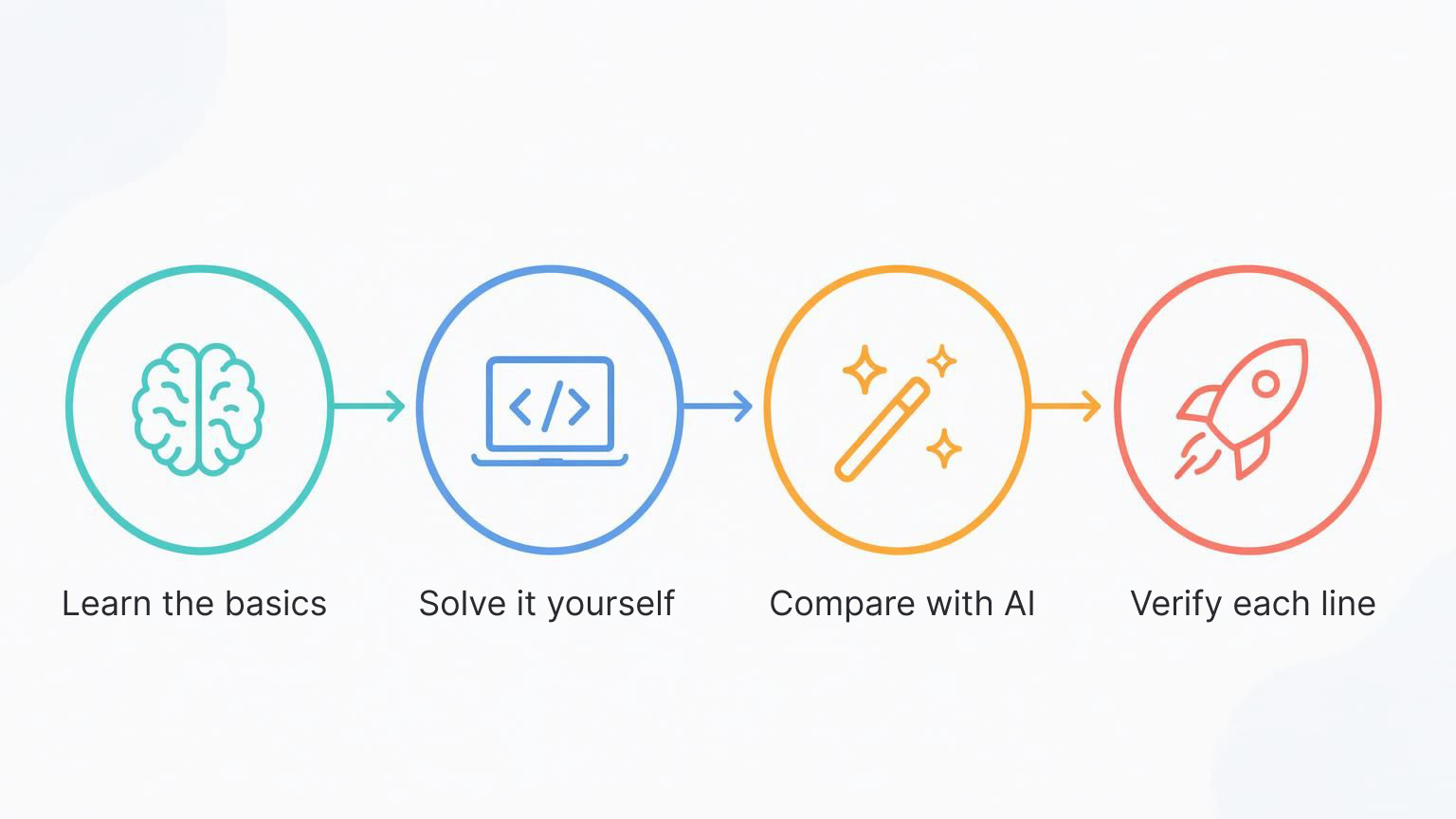
The order of learning shifts too. Learning used to mean memorizing syntax and typing everything yourself. Now it is more efficient to build the reading-and-judging muscle first. That does not mean skipping the basics. You still have to write variables, loops, conditionals, and functions by hand, because that minimum skeleton is what lets you read AI's code at all. The Python basics course is a good place to build that skeleton by running code right in the browser.
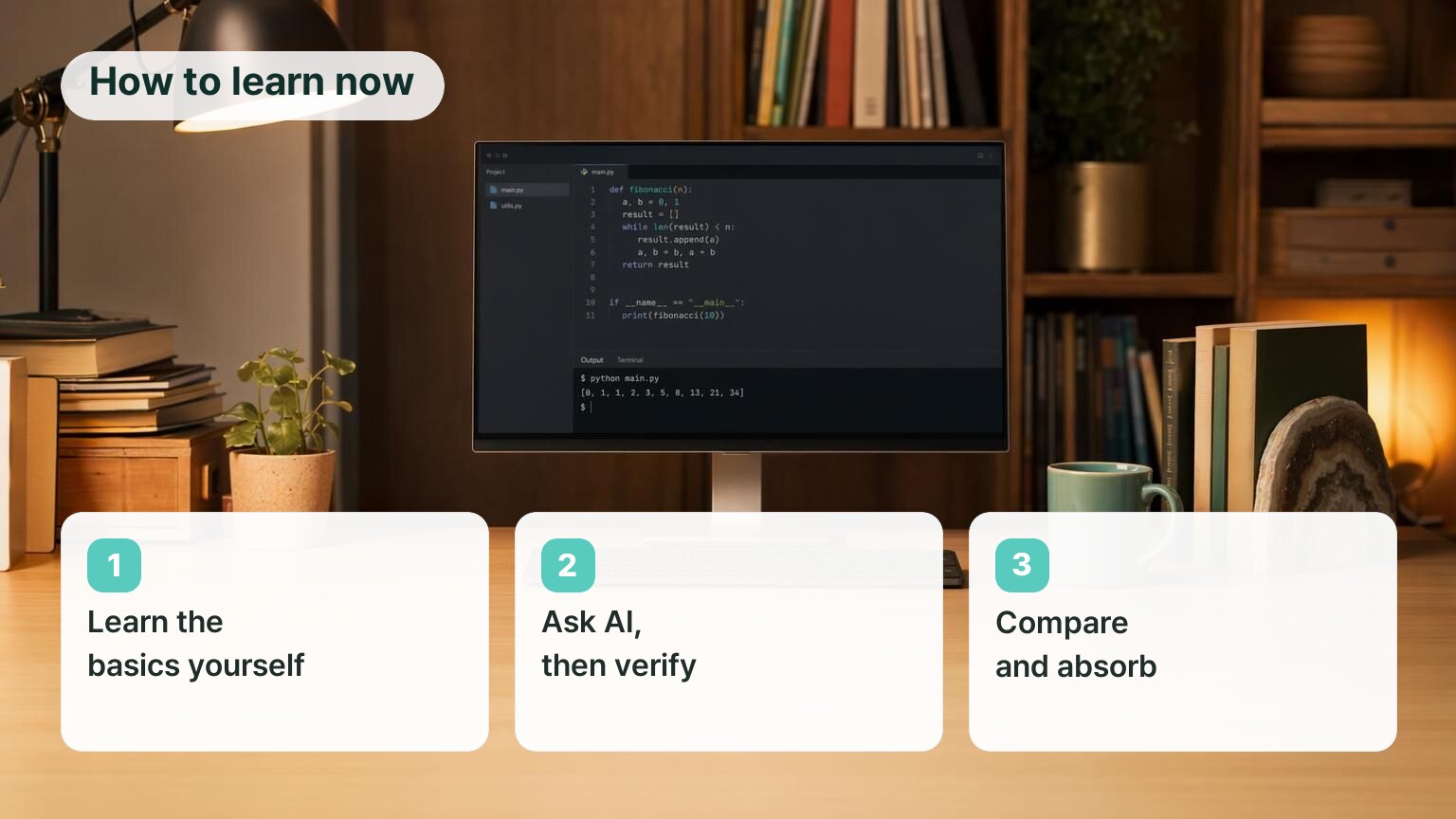
After that, practice asking AI precisely and verifying the result. Solve a problem yourself, ask AI to solve the same one, then compare the two. Just interrogating AI's code line by line, asking why it did what it did, grows your reading eye fast. If you want to go deeper on working with AI as a tool, the AI prompt engineering course walks through designing requests and checking the answers. For the bigger picture of how AI works under the hood, the AI fundamentals course helps too.
How the job market shifts
Roles that just type out code on request are shrinking, and yes, AI is filling them quickly. What grew more valuable is deciding what to build, catching what AI got wrong, and designing the whole structure. What companies expect from junior developers is moving from "write everything alone without AI" to "build fast with AI and catch its mistakes."
So code review, the ability to read someone else's code (or AI's) and spot the problems, is worth more now. The person who skips learning to code and leans entirely on AI ends up in the weakest spot in this market. Anyone can ask for output, but only someone who knows code can verify it.
What to actually do today
You do not need a grand start. Finish one small thing yourself first. Then ask AI to build the same thing and compare it against your version. Add one more habit, picking a line of AI's code you do not understand and asking "why is this line here," and you start to build the eye for verification. If you are still stuck on which language to start with, read Python vs JavaScript as a first language first.
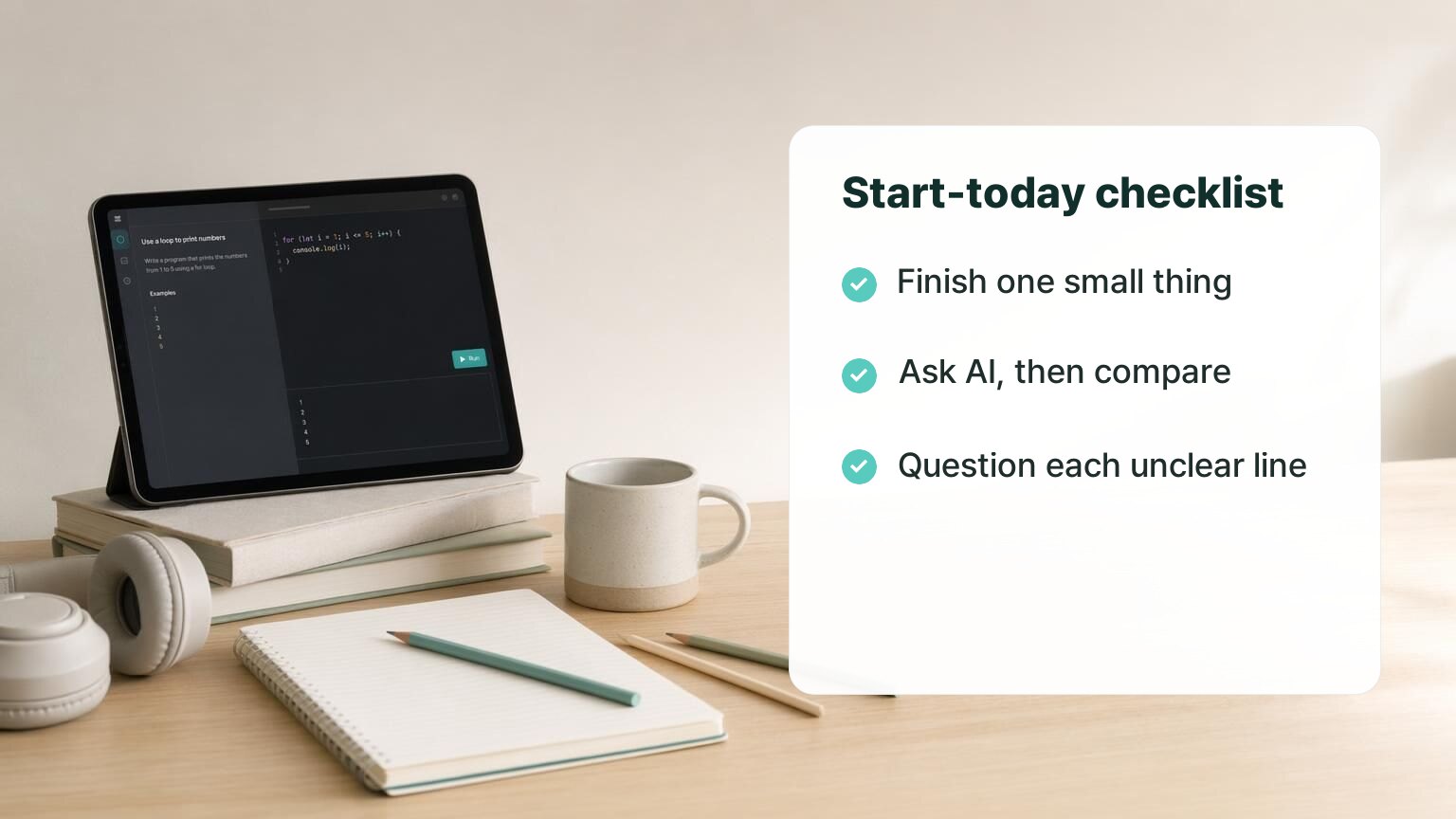
CodeFriends is built to run code in the browser with no setup and give you real-time AI feedback when you get stuck. That verify loop, running AI's code on the spot and asking why it works, is the heart of learning in the AI era, so that is what we focused on. Stop deliberating and run your first line today.
Frequently asked questions
If AI does all the coding, will developers disappear?
The work changes more than it disappears. Time spent typing goes down, while time spent deciding what to build, verifying AI's code, and designing structure goes up. The role of the person who reads and judges code is getting more important, not less.
Can I build an app by only prompting AI without knowing how to code?
You can get to a simple demo, the so-called vibe coding. But the moment an error, security, or performance issue shows up, you are stuck if you cannot read the code. Verifying and fixing what AI produces requires at least a basic foundation in coding.
Which language is best to learn in the AI era?
Reading and judgment matter more than any specific language. If you must pick, Python is a comfortable entry point because it has the most material in AI and data. Whichever language you start with, core ideas like variables, loops, conditionals, and functions carry over, so learning one well makes the next one easy.